Nurturing Hope Materials and Resources
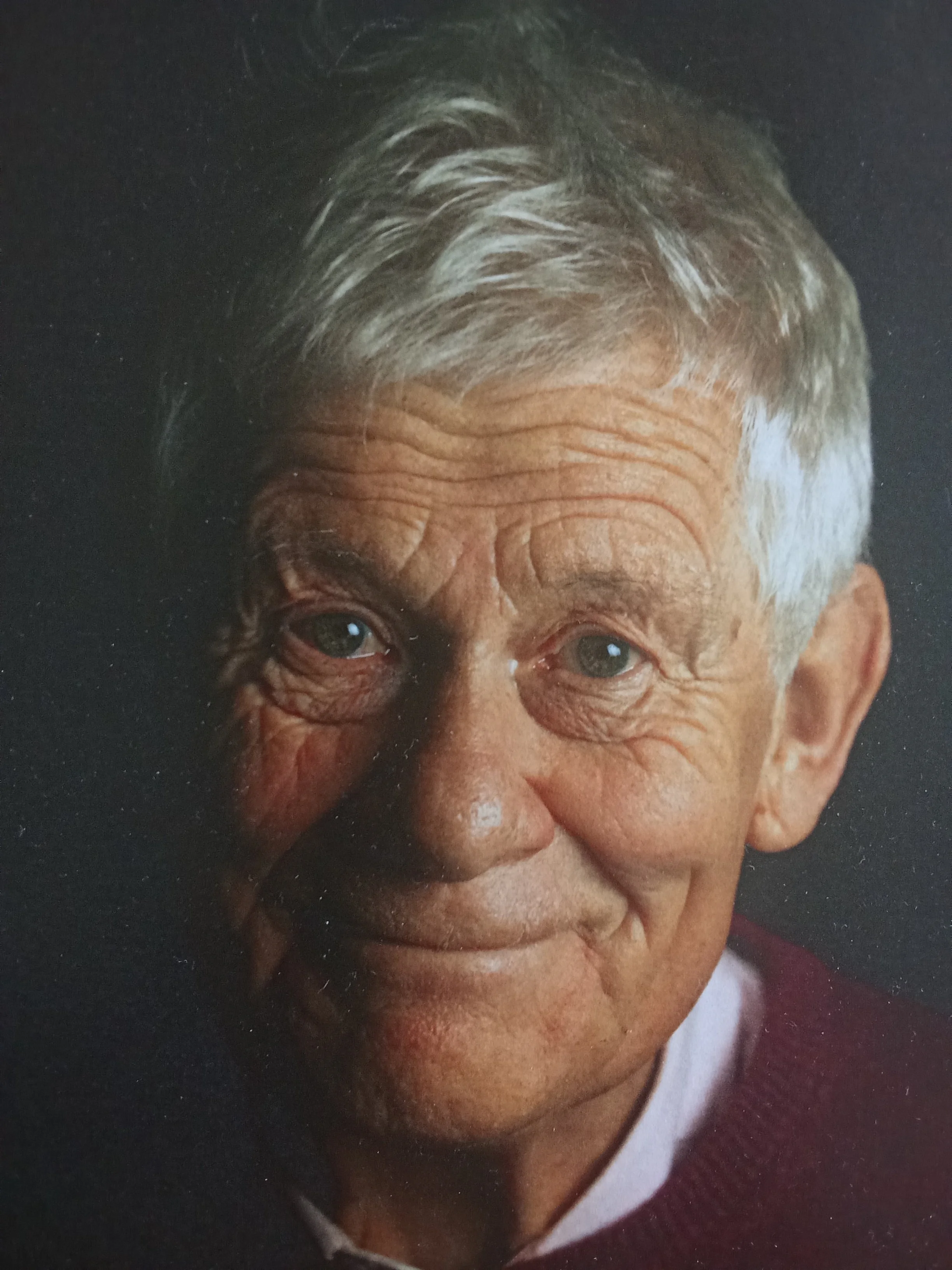
Nurturing Hope is UCT’s current primary programme, established in 2019 when Derick was undertaking a Fulbright Fellowship in San Antonio Texas. The Nurturing Hope team is composed of Duncan Morrow, Dong Jin Kim, Jean Horstman, and Derick Wilson, who is always with us. All are members of the Corrymeela Community.
Its five modules have evolved from the team’s sometimes very tentative and often uncertain working in the midst of different conflicts in: Northern Ireland, between the United Kingdom and Ireland, the Korean Peninsula and the United States. To request the materials please contact welcome@nurturinghope.net
These models are rooted in and have emerged from: the work of the Corrymeela Community since its inception after 1965; the work of Rene Girard; the authors’ practice work and research in the practice of reconciliation, mainly in Northern Ireland: the practice of our various learning partners in and beyond Northern Ireland. The models were piloted in the Republic of Ireland, Great Britain, Eastern Europe, Korea and The United States.
These are not prescriptive texts, asking you to follow particular paths or to accept the ideas within Nurturing Hope uncritically. They are an invitation to reflect by yourself, or with different others, on how we all might better understand those dynamics between us that drive us further apart within our different groups and societies. It is also about understanding the importance of those relationships and structures dynamics that offer us some new ways forward together, beyond distrust rivalry and conflict.
The exploration of each dynamic includes an introductory text, guided individual reflection, and an individual and/or group exercise. The texts and the learning methods are not prescriptive. There are no right and wrong answers. Each person is free to make their own reflections and choices.
The Nurturing Hope materials is a Fulbright Scholar in Residence Project and a project of UCT, awarded a Catalyst Grant by The Royal Society of Arts, 2021. These learning materials are informed by ‘Understanding Conflict...and finding ways out’ (1987-91) and the work of The Corrymeela Community since 1965, and many people and groups who have supported our various. practical programmes. With funding support from the Royal Society of Arts (London) for their award of a Catalyst Seed Grant in 2021, unRival in USA , Okedongmu Children in Korea, Seoul.
Nurturing Hope learning materials authors: Derick Wilson, Duncan Morrow, Jean Horstman and Dong Jin Kim
Learning Partners: Professors Andrew Hill & Irene Young (St Philip’s College), Migdalia Garcia and Neil Lewis (North West Vista College), Alamo Colleges District, San Antonio, Professors Gibeom Lee and Young-Chul Chung (The Okedongmu Project, South Korea),Prof. Kyungmook Kim (Waseda University, Japan)
1. INTRODUCTION: A TRANSFORMATIVE AND RESTORATIVE LEARNING APPROACH
Nurturing Hope emphasises the importance of creating and sustaining relationships, groups and organisations where people from diverse backgrounds and beliefs meet and work together respectfully. The materials explore how, when we model freedom with and for each other, we create spaces for all to experience the possibility of meeting and acting together in new and more open ways. We nurture hope with each other in relationships and structures where disagreement is welcomed as an opportunity for exploration, not a cause to hate.
2. A FACILITATOR’S GUIDE
The facilitators guide, and the access to associated support resources with it, affirms and encourages people to engage in group facilitation and learning over time, nurturing and maintaining diverse reflective learning groups.
3. SOME DYNAMICS OF RELATIONSHIPS
This module supports learning and reflection on ten dynamics that shape our relationships. The dynamics examine the role of mimesis in the creation of free and supportive relationships as well as the contribution of escalating desire in the creation of destructive and violent relationships that can culminate in scapegoating.
4. SOME DYNAMICS OF CONFLICT-AFFECTED SOCIETIES
This module introduces and explores ten dynamics evident in conflict-affective societies where opposing group identites dominate relationships, politics, and civil society leading to separation, avoidance, politeness, and the generation of group ‘sacreds and absolutes’ that often end in tit-for-tat revenge and retaliation.
5. SOME DYNAMICS FOR HOPE
This module explores ten dynamics that promote and nurture trust, personal and group agency, and open hopeful relationships. It is a deep dive into the underpinning principles: equity, diversity and interdependence and the values that shape how we engage in freedom with each other: respect, inclusion, and no-violence. It explores shared rituals and new events, patterns, structures and norms, the potential of inter-generational learning and meeting together around local and global issues, without becoming isolated and hopeless. Explores restorative practices to create new relationships between individual and groups.
Other Publications:
Ontological security and protracted conflict in frontier societies: towards a trans-local turn in peacebuilding
Dong Jin Kim & Duncan Morrow Published online: 26 Jun 2024
Reciprocal empowerment for civil society peacebuilding: sharing lessons between the Korean and Northern Ireland peace processes
Dong Jin Kim Published online: 15 Feb 2021
Publications by Derick Wilson:
Future Citizens of a Shared Society
Promoting a Restorative Society Culture
The Significance of Reconciliaton Centres
Derick Wilson Workshop at Jefferson State - March 18 2020
Corrymeela Stories - Derick Wilson
Other Resources: